Shadow over El Fasher: Inside North Darfur’s Besieged Citadel
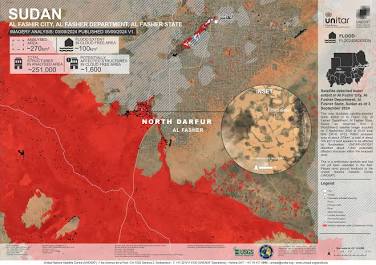
EL FASHER / CHAD BORDER — The satellite image updated at 03:00 UTC, revealing what ground communications could no longer confirm: three distinct plumes of dark smoke rising from the perimeter of the Abu Shouk displaced persons camp. Inside the city, the air smelled perpetually of burnt diesel, dry earth, and cordite.
For months, El Fasher—the historic capital of North Darfur—has stood as the final stronghold of the Sudanese Armed Forces (SAF) and joint allied native militias in western Sudan. Encircled by the paramilitary Rapid Support Forces (RSF), the city of nearly two million people, including hundreds of thousands of internally displaced civilians who fled earlier waves of violence, has been transformed into a pressure cooker of starvation, urban warfare, and digital blackouts.
Through encrypted audio logs, satellite imagery analysis, and interviews with aid workers and survivors who crossed into eastern Chad, this investigation reconstructs the anatomy of a city systematically cut off from the world.
The Architecture of Encirclement
Starting in early spring, armed forces established a multi-layered ring of checkpoints along every major highway connecting El Fasher to eastern Chad and central Sudan. Commercial trucks carrying flour, fuel, and medical supplies were either turned back, looted, or taxed at astronomical rates, systematically stripping city markets of basic goods.
t Checkpoint 4 on the western approach, armed units routinely halt civilian transport. A single bag of sorghum that previously sustained a family for weeks now commands prices exceeding a typical household's quarterly savings.
"We don't count the days by the calendar anymore," whispered a local volunteer medic via a brief satellite link before the line collapsed into static. "We count them by the pressure in the water pipes and the silence on the frequency."
Medicine in the Shadows
Inside the municipal center, healthcare infrastructure has disintegrated. Major medical centers—including the South Hospital, long the regional hub for trauma care—have sustained structural hits from mortar fire, forcing surgical staff to operate in basement corridors without grid power or running water.
- Surgical Realities: Field medics report conducting emergency procedures under smartphone lights, using basic saline washes for deep shrapnel wounds due to depleted antiseptic stocks.
- Severe Malnutrition: Children arriving at triage units face compounded risks: trauma recovery is frequently stymied because patients lack the basic protein levels required for wound healing.
- Water Crisis: Central pumping infrastructure lacks the fuel needed to operate high-capacity generators, leaving residents dependent on unmonitored shallow wells dug near dry riverbeds.
The Information Vacuum
Beyond the physical siege, El Fasher faces an intentional communications blackout. Mobile networks across North Darfur have been disabled or severely damaged, cutting off civilian communication with family members in neighboring districts and halting mobile banking apps that millions used to purchase food.
Humanitarian agencies note that the blackout creates a dangerous buffer, allowing targeted abuses, forced displacements, and unlawful detentions to occur unrecorded. Independent researchers rely on high-resolution satellite optics to track scorched-earth signatures across the outer settlements of Abu Shouk and Zamzam.
A Citadel on the Edge
As international diplomatic channels remain stalled, the struggle over El Fasher reflects more than a territorial objective. For the civilian population locked within its perimeter, each passing week narrows the boundary between precarious survival and total humanitarian collapse.
The brief voice memo transmitted from the city's southern quarter remains one of the few recent direct signals from inside the grid. In the background of the audio, right before the connection drops, the rhythmic thud of heavy artillery echoes against dry brick—the persistent tempo of a city holding out in isolation.